Showing posts with label Nutrition. Show all posts

How to eat an Avocado: Nutrition Benefits, Tips & Preparation


Hello everyone and welcome back. I appreciate you for all your feedback. Let us continue learning.

Today we will look at avocados and their benefits. Are there myths you know about avocados? Mmhh...Some people wouldn’t eat an avocado in fear of it raises cholesterol levels. In our article today, we will look at what exactly are the benefits of avocados. Kama kawaida let us get into it, shall we?

Avocado is highly nutritious and something that you want to include as part of your daily diet for optimal health. Now some people fear that it is high in fat and calories. An avocado, is highly beneficial in all the right nutrients that support our health in so many different ways. What is the nutritional composition and why is this powerful food to include as part of your regular diet? For starters, a medium size avocado is about 300.Calories as part of a whole food salad that is an excellent amount but in general, consuming a half or one avocado a day is considered fine and healthy.

Aside from the calorie content, you can expect to find about 12 or 13 grams of fat in about half an avocado or about 25 grams in a full one. Fats in avocados are extremely beneficial to our health. There are so many different fatty acid benefits like oleic acid that makes up pretty much half of the avocado's fat. What makes these fats so powerful is that they help to make your brain function properly and they help to build your cells. A lot of us don’t understand that our cells need a fat composition in order to be built and work properly. Avocados are also beneficial for your heart health. Remember that fat, as long as it's the healthy fat, can actually decrease your risk of heart disease and improve your cardiovascular health. Avocado is also highly anti-inflammatory in nature, which is one of the major risk factors, as is inflammation for heart disease.

The healthy fats also are vital in proper absorption, of not just fat soluble vitamins, but a lot of the antioxidants, specifically carotenoids contained in avocado.

Avocados are extremely rich in a variety of different antioxidants, specifically from the carotenoid group. Now carotenoids you may be familiar with from foods like carrots. The green fleshy part is extremely rich in a number of different carotenoids, one of them being lutein and as we know today lutein is extremely beneficial for proper eye health.

Aside from brain health, heart health, eye health and being extremely anti-inflammatory, which just helps all parts of our health, the benefits of eating an avocado also include anti-cancerous because of the antioxidants that it contains. The avocado also helps us regulate our blood sugar to support our health on so many different levels and enhances our overall good health. Avocados are also rich in various vitamins and minerals specifically vitamin K, vitamin C, some of the B vitamins, like vitamin B5 and B6, as well as potassium.

Avocados can be put into salads because they really invigorate salads to become whole meal ideas.

Another way is to use it on different meal ideas or as a side to different meals.

Avocados go great with almost any food, as their taste is quite mild. Slightly on the sweet side but generally mild, so they go really well with everything.

Guacamole is another famous food that you may want to try using fresh avocados. It is absolutely amazing when you make your own homemade.

Bottom line, the avocado is extremely versatile and again, for its nutrition and delicious taste and health benefits, something you want to include as part of your everyday diet.

Here are tips on how to store your avocado.

First and foremost you don't want to cut it up as much as possible. if you know you're only going to eat half, store the other half, with it’s shell and, if possible pit. The pit will actually help it stay longer and fresh, and put it in a sealed container.

You can also sprinkle some lemon juice to prevent that oxidation or browning process.

 If you do make a meal with some avocados and you're storing that for later, please note that they might turn bit grey or brown which is not a big deal. Storing cut avocados for long decrease the nutritional composition. Cooking avocados will only destroy nutrients like the vitamins, the minerals, the phytochemicals, the carotenoids, and the antioxidants. They are best eaten raw, and as part of any meal.

Nutrition for a Healthy Life

 From the minute we are  born, we are aging. Constant exposure to our environment, the things we eat, and stresses from both inside

and outside our bodies all cause us to age over time. Aging is highly complex, but scientists are starting to understand what happens at the

Cellular and molecular levels.

For example, healthy cells are damaged over time when our immune systems shift from reacting to short-term problems like injuries and infections, to gradually producing chronic inflammation throughout the body.

Time also gradually shortens the telomeres that act as protective caps for our DNA-containing Chromosomes. These and other changes make our bodies less and less able to deal with stress from inside

and outside of our body, so when damage reaches a critical level, our cells, tissues, and organs may no longer perform normally and our health starts to decline. The changes associated with aging start to happen on some level at day one. We begin to experience their effects early in life.

For example, we lose the ability to hear certain high-frequency sounds as teenagers, our cognition and memory slowly decline after they peak in our mid-20s, the strength of our bones starts to decrease in our 30s, female fertility sharply declines after 35, age-related near-sightedness begins in our mid-40s, and our hair starts to gray and thin as early as our 30s and 40s. After the age of 50, the changes of aging become increasingly noticeable, and because aging is the biggest risk factor for most of the diseases that affect us as adults,

the older we get, the higher our risk of chronic disease becomes.

While scientists have not yet found a way to stop these processes of aging, they are learning more and more about how to maintain health throughout our lives. Some aspects of aging are out of our control--like our genetics and our family history--but we can educate ourselves about moderate risk factors and do our best to reduce them through healthy lifestyle and diet choices. Most of us can be healthy and active well into our later years, if we take care of ourselves.

It's no surprise that regular physical activity can help maintain a healthy weight, improve moods and sleep habits, and boost overall health. And it's clear that a well-balanced diet full or nutritious foods, is critical to good health. But when it comes to understanding which foods are the best choices, much nutrition research has focused on how certain foods or nutrients may have a negative effect on health, or even play a role in disease development. More recently, scientists have begun to explore and understand how nutrition may play a role

in promoting healthy aging throughout of all life's stages. We are rapidly learning about what foods and nutrients should be emphasized in our diets, and how they can enhance our health.

Diets full of fruits and veggies, whole grains, legumes, nuts, and lean meats, have proven health benefits like lowering blood pressure, improving glucose control in diabetes, weight loss, improving arthritis, and reducing the risk of cancer and cardiovascular events,

to name a few. And we are learning more about the specific nutrients that can impact health.

For example: plant pigments found in bright orange and red fruits and vegetables may prevent and slow the progression of eye diseases.

·         Calcium helps to keep bones strong.

·         B vitamins play a role in maintaining brain health and,

·         Flavonoids from many plants may improve the health of our cardiovascular systems.

The bottom line is that YOU have the power to maintain and improve your health, add vitality to your years, and reduce your risk of diseases, and it's never too late to make a change.

To learn more about the nutrients that are critical to your health and how to safely turn to supplements if you aren't getting enough of these nutrients in your diet, watch Healthy Aging With Nutrition at www.agingresearch.org/nutrition.


https://youtu.be/c06dTj0v0sM

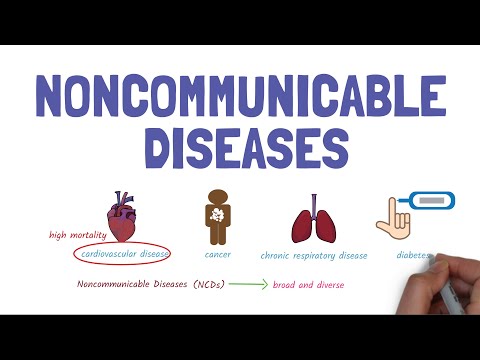
A GLOBAL KILLER… NON-COMMUNICABLE DISEASES – AN INTRODUCTION

Hello and welcome as we look at non-communicable diseases. We’ll take a look at what they are and some key features about them. Non-communic...